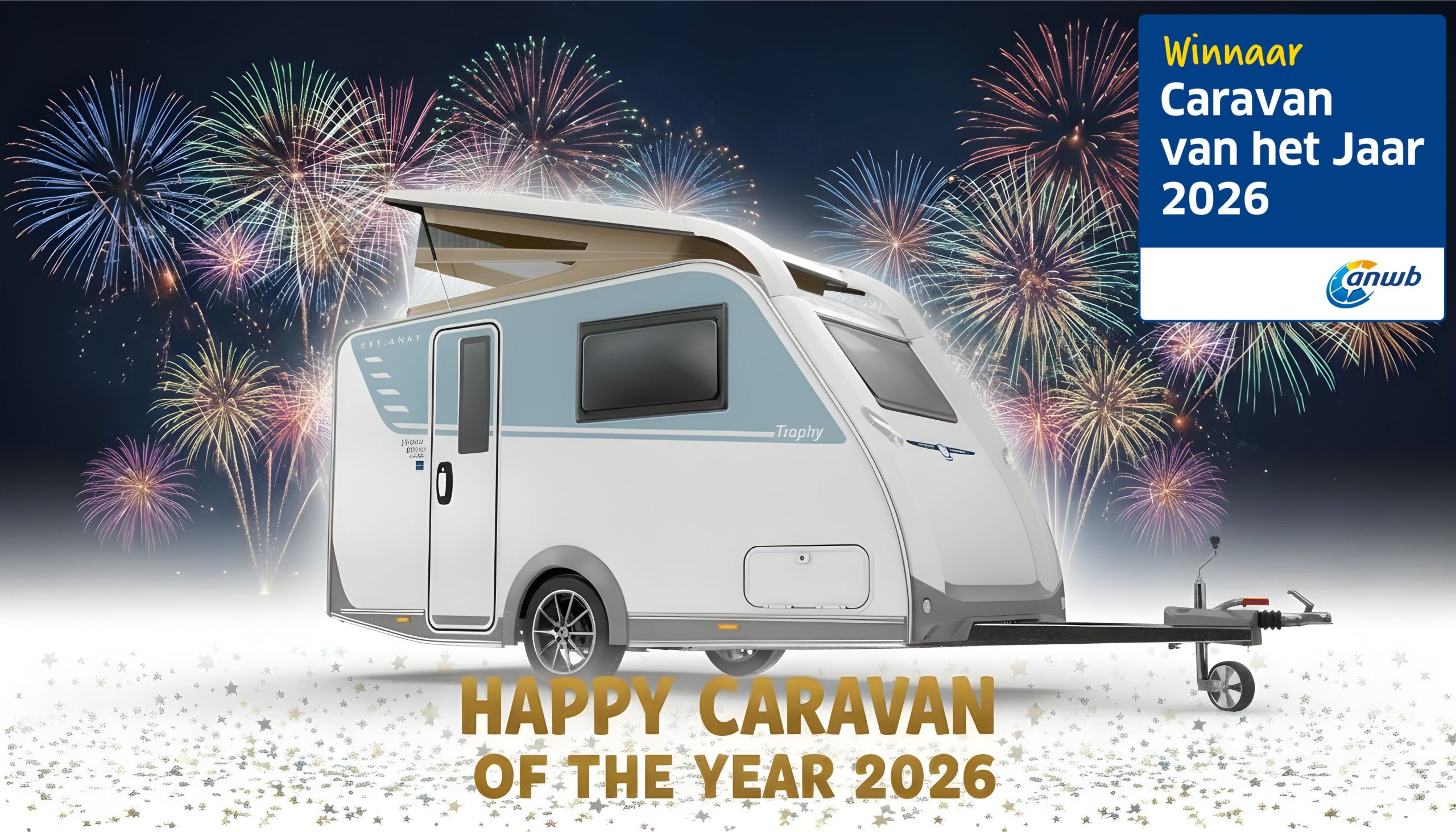
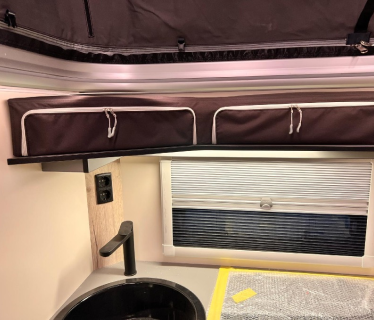
The TakeOff and GetAway are specifically designed for adventurous campers. That’s why they are especially popular among “frequent travellers” who love exploring countries or regions on the move. Thanks to their low weight, compact travel dimensions and aerodynamic design, they offer outstanding driving characteristics—allowing you to reach places you’d normally avoid with a standard caravan or motorhome. Being well-prepared is essential, so in this blog we explain a few important topics.
One-Pedal Drive
Many electric and hybrid cars are now equipped with a so-called one-pedal drive system. This allows you to both accelerate and decelerate with just the accelerator pedal. When you release the pedal, the electric motors are used to slow the vehicle down, and the resulting energy is regenerated into the battery—helping to increase the vehicle’s range.
However, we strongly advise switching this function off when towing a TakeOff or GetAway. If not, it can lead to overheated and damaged brakes. While one-pedal driving may feel convenient, it doesn’t work as intended when towing. Every time you lift your foot off the pedal, the car slows down and activates the overrun brake.
Overrun Brake
In Europe, almost all trailers and caravans use an overrun brake. On the AL-KO chassis, this system ensures that when the tow car brakes, the TakeOff or GetAway also slows down. A sliding mechanism in the tow hitch compresses, pulling a brake rod. This rod is connected to brake cables, which pull the brake shoes against the drums.

To prevent the brake from engaging with light deceleration or pedal release, a damper (similar to a shock absorber) is installed.
You can imagine that reversing also causes the car to push against the trailer and potentially activates the brake. To avoid this, a reverse mechanism is built into the brake drums. This mechanism reduces the pressure of the brake shoes when the drum turns backwards, allowing the trailer to reverse even with the sliding element compressed.
Mountain Driving
The overrun brake also has limitations when driving in the mountains. If you descend a steep hill at constant speed using engine braking, the trailer pushes against the car—activating the brakes constantly. This, like with one-pedal driving, can lead to overheated brakes.
To avoid this, the trailer brakes should never remain engaged for extended periods. It’s better to brake harder for a short time than to apply continuous light braking. As a rule of thumb, descend at the same speed as you would drive uphill. On long, steep descents, take breaks to allow the brakes to cool down. The overrun brake will reset itself once you begin driving again.
Ready for your next adventure?
Want to make sure you’re fully prepared for the road with your TakeOff or GetAway? Visit our website for more useful tips and technical background information. Build your ideal camping setup in our online configurator or visit an official dealer near you for personal advice. That way, you’ll hit the road with peace of mind and full control.